
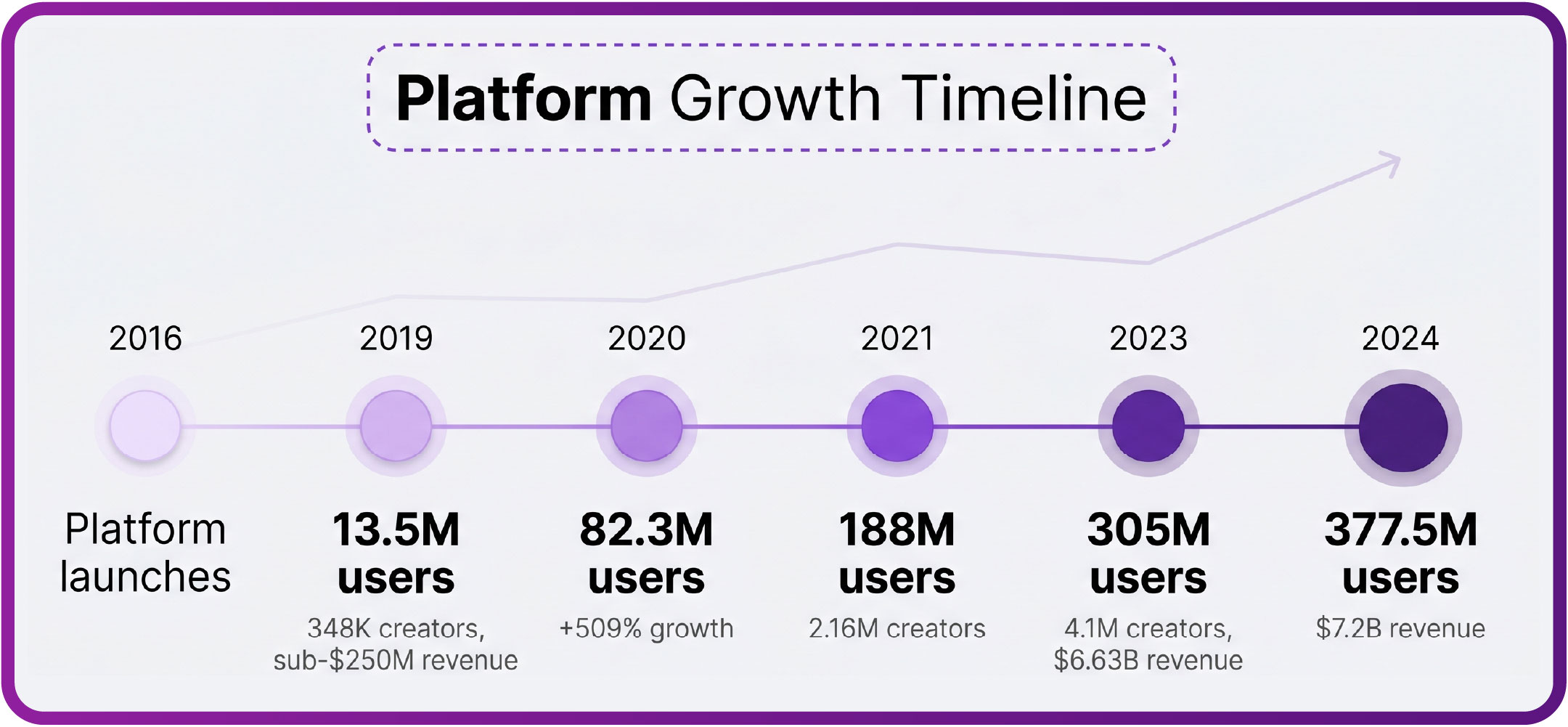
OnlyFans pricing looks simple on the surface: a number next to a subscribe button. Underneath, every dollar passes through a platform fee that shapes what creators actually keep and how they set their rates. This guide breaks down the 20% cut transaction by transaction, explains why the price you see is never the amount a creator receives, and shows how that gap influences the pricing decisions you encounter on ranking sites like BestOnlyFans. By the end, you will be able to read any subscription, PPV, or tip amount and estimate the real economics behind it.
Understanding the mechanics matters because it changes how you compare pages. Two creators charging the same monthly rate can offer very different value once you know how fees, bundles, and add-on purchases interact. The clearer your picture of the split, the better your budgeting decisions become.
Where the 20% Fee Applies Across OnlyFans Transactions
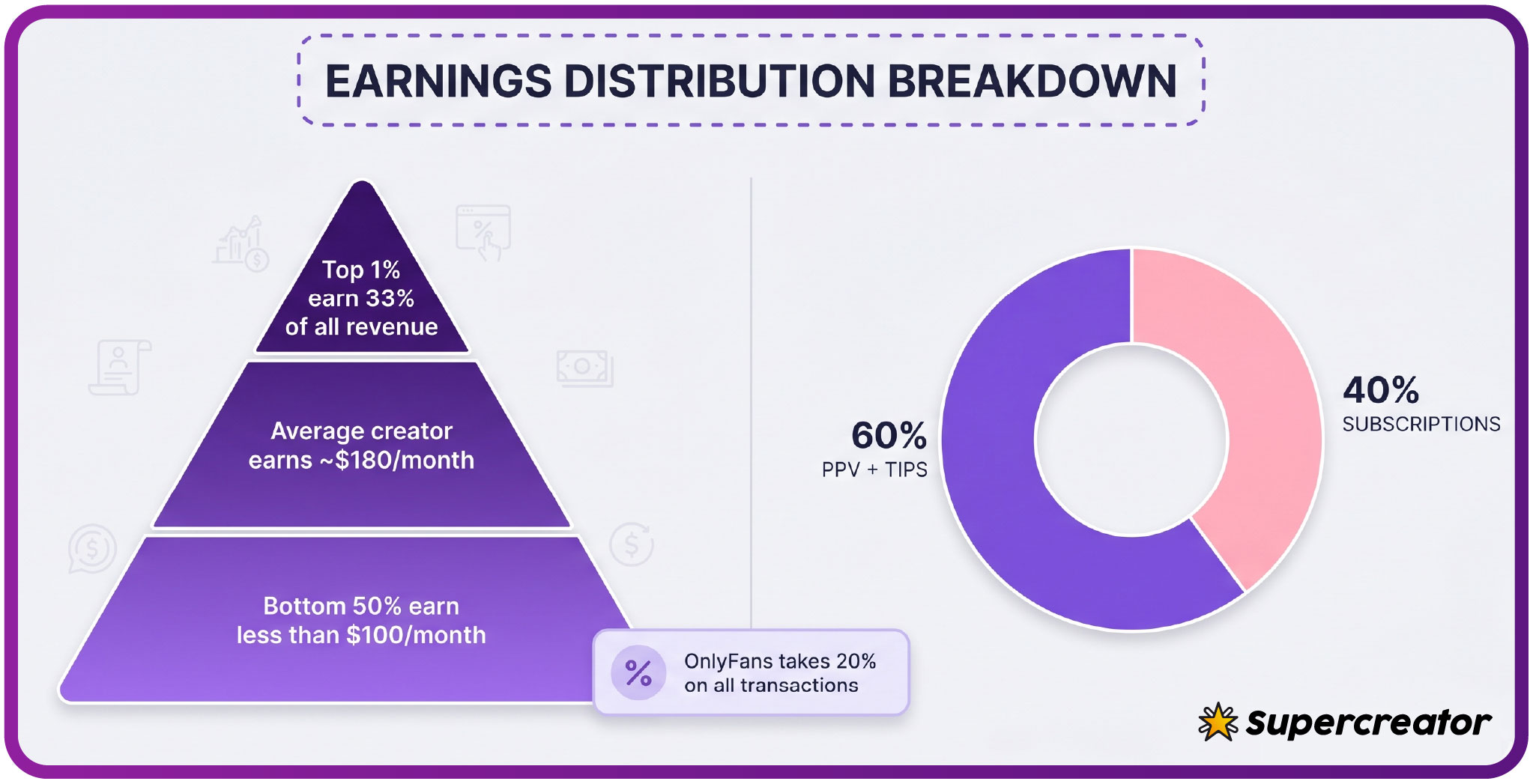
OnlyFans takes a flat 20% platform fee on essentially everything a fan pays. The creator keeps the remaining 80%. That single rule applies across subscriptions, promotional first months, pay-per-view messages, tips, and payments for custom content. There is no transaction category where the split changes.
Monthly subscriptions are the most visible example. A $10 subscription sends $2 to the platform and $8 to the creator. The minimum paid subscription is $4.99, and the maximum is $49.99. Promotional first months can dip below $4.99 — a $3 first month is allowed — but the base price may never go under the floor. Free pages sit at $0 and earn through PPV and tips instead.
- Monthly subscription at $10: subscriber pays $10, creator receives $8, platform keeps $2.
- PPV message at $25: subscriber pays $25, creator receives $20, platform keeps $5. PPV unlocks can go up to $50.
- Tip of $10: subscriber pays $10, creator receives $8, platform keeps $2. Tips can reach $100.
- Paid chat message at $4: subscriber pays $4, creator receives $3.20, platform keeps $0.80. Paid chat commonly runs $3-$5 per message.
- Custom content request at $50: subscriber pays $50, creator receives $40, platform keeps $10.
The pattern holds regardless of size. Small transactions feel trivial per unit, but the 20% compounds quickly across a month of activity, which is why the fee structure rewards creators who price deliberately rather than randomly.
Why Visible Prices Differ From Creator Revenue
It is what you pay, not what the creator banks. Creators price against the 80% they actually receive, so a rate that looks modest to a fan may already reflect a deliberate markup to hit a target net figure.
| Transaction Type | Subscriber Pays | Creator Receives | Platform Keeps |
|---|---|---|---|
| Monthly subscription | $10.00 | $8.00 | $2.00 |
| PPV message | $25.00 | $20.00 | $5.00 |
| Tip | $20.00 | $16.00 | $4.00 |
| Custom content | $50.00 | $40.00 | $10.00 |
Typical paid subscriptions cluster between $4.99 and $15, with averages landing around $5-$10. When a creator prices at the top of that band, part of the reasoning is usually the net they need after the cut. When a creator raises the price later, auto-renew stops for existing subscribers, and access lasts until the current paid period ends. That detail matters for anyone tracking spend.
Tip: before subscribing at a higher tier, subtract 20% from the visible price. If the resulting net still looks reasonable for what the page delivers, the pricing is likely content-driven rather than arbitrary.
How Fees Factor Into Ranking Card Price Displays
That absence is exactly why ranking sites exist — they aggregate and compare pages so fans can find them at all. The catch is that price data on ranking cards can be displayed as gross (what you pay) or net (what the creator keeps), and the two are rarely labeled clearly.
- Does the displayed price represent the full amount charged at checkout, or an estimate after deductions?
- Is the figure the base monthly rate, or a promotional first-month rate that reverts later?
- Are PPV and tip ranges listed alongside the subscription price, or omitted entirely?
- Does the card distinguish between a free page at $0 and a paid page with a minimum $4.99 base?
Anyone comparing pages should treat unlabeled price data as gross by default. Gross is what leaves your account, so it is the safer assumption for budgeting. Net figures are useful context, but they describe the creator’s side of the transaction, not your cost.
The Math Behind Bundle Pricing and Platform Cuts
A bundle discount reduces the gross total, but the 20% platform cut still applies to whatever you pay. Whether you actually save depends on how the discount compares to paying month by month.
- Start with the base monthly price, for example $10.
- Multiply by three months to get the undiscounted gross: $30.
- Apply a typical bundle discount, say 15%, bringing the gross to $25.50.
- Deduct the 20% platform fee from the bundle total: $5.10 goes to the platform.
- Subtract the fee to find creator net: $20.40 for three months.
- Compare against three separate monthly payments, where the creator would net $24 total.
In that example the subscriber saves $4.50 gross, but the creator nets $3.60 less than with monthly billing. Bundles trade creator revenue for commitment and cash flow. That trade-off explains why some creators discount aggressively and others avoid bundles entirely.
BestOnlyFans Approach to Net Versus Gross Pricing
Transparency about the fee split is a core part of how BestOnlyFans structures its ranking methodology. Rather than presenting a single headline number, the approach treats gross price and creator net as two separate data points, because each answers a different question. Gross tells you what a subscription costs. Net tells you how much of your payment reaches the person producing the content.
Price history tracking adds a second layer. When a creator changes a rate, the visible change is only part of the story. A raise from $8 to $10 looks like a 25% increase to a subscriber, but the creator’s net moves from $6.40 to $8.00 — also 25%, since the fee is proportional. Recognizing that proportionality prevents misreading pricing changes as fee-driven when they are simply rate adjustments.
This framing also helps when comparing a page listed in a milf-focused ranking roundup, such as a directory entry for the best onlyfans milf, where price bands and content categories sit side by side. Understanding both figures makes those comparisons more meaningful than a raw number alone.
Budget Implications of Fee-Layered Transactions
A single subscription is easy to budget. A month of mixed activity is not. Each tip, PPV unlock, and paid message carries its own 20% cut, and the totals add up faster than the individual amounts suggest.
- Daily $2 tips across a month: $60 gross, $12 in fees, $48 to the creator.
- Weekly $25 PPV unlocks: $100 gross, $20 in fees, $80 to the creator.
- Ten paid chat messages at $4 each: $40 gross, $8 in fees, $32 to the creator.
- One $50 custom request per month: $50 gross, $10 in fees, $40 to the creator.
- Impulse PPV purchases during a promotional month: fees scale with every unlock, not the subscription rate.
- Stacking a $10 subscription with regular tipping: combined gross of $70, $14 in fees.
- Renewal at a raised price after auto-renew stops: same 20% cut on the higher amount.
- Multiple subscriptions across several pages: each one carries its own separate fee deduction.
The practical takeaway is that your real monthly spend is the sum of gross amounts, not the headline subscription price. Tracking gross totals gives an accurate budget; tracking only subscription rates undercounts by a wide margin for active fans.
International Subscribers and Hidden Cost Layers
The 20% platform fee is not the only cost layer for subscribers outside the United States. Currency conversion and card charges stack on top, and they apply to the gross amount before the platform cut is even calculated.
| Cost Layer | When It Applies | Approximate Impact |
|---|---|---|
| Platform fee | Every transaction | 20% of gross, deducted from creator side |
| Currency conversion spread | Non-USD cards | Varies by issuer, applied at checkout |
| Foreign transaction fee | Cards issued outside the billing region | Typically a small percentage of each charge |
| Regional payment method surcharge | Certain local payment options | Depends on the provider and method chosen |
| Card verification hold | First-time card linking | $0.10, refunded within days |
These layers do not change the creator’s net — the platform fee is calculated on the gross charge — but they do change your effective cost per transaction. A subscriber paying in a non-USD currency can end up spending noticeably more than the visible price suggests.
Reading Creator Pricing Through the Fee Lens
Once you know the split, visible prices become readable signals. Reverse-calculating the creator’s approximate net from any displayed rate tells you something about the business model behind the page.
- A base price pinned at $4.99 suggests volume-focused positioning with thin per-subscriber margins.
- A mid-band price around $10 suggests a balance between accessibility and sustainable net revenue.
- A price near the $49.99 ceiling suggests a niche or premium positioning with fewer expected subscribers.
- A $0 page with active PPV and tips suggests reliance on transactional spending rather than recurring revenue.
- Frequent promotional first months below $4.99 suggest a strategy built on conversion and renewal, not first-month income.
None of these patterns is inherently better. They simply describe different trade-offs between reach, revenue per fan, and content investment. Reading them through the fee lens turns a price tag into a small piece of useful context.

FAQ
Does the platform fee ever change for high-earning creators?
No. The 20% fee is flat and applies to all creators regardless of earnings volume. There is no published tiered structure, so a creator earning at any level keeps the same 80% share on every transaction.
Why do some creators price at exactly $4.99?
The $4.99 figure is the minimum base subscription price allowed on paid pages. Pricing at that floor maximizes accessibility and subscriber volume, with the creator netting $3.99 per month after the platform fee.
Are PPV messages subject to the same fee as subscriptions?
Yes. PPV unlocks, which can go up to $50, carry the identical 20% platform fee. A $25 unlock sends $5 to the platform and $20 to the creator, exactly matching the subscription split.
How do I know if a ranking site shows prices before or after fees?
Check whether the site labels the figure as a checkout price or an earnings estimate. Unlabeled prices are usually gross amounts, meaning what you pay. If a number seems unusually low compared to typical $5-$10 averages, it may be a net figure instead.